 {# Overlay logo in the middle of the banner, no layout shift #}






What Atlanta United is betting on - and what happens if it doesn’t hold
Atlanta United Signs Lucas Hoyos - Risk, Recovery, and a Clear Break from the Past



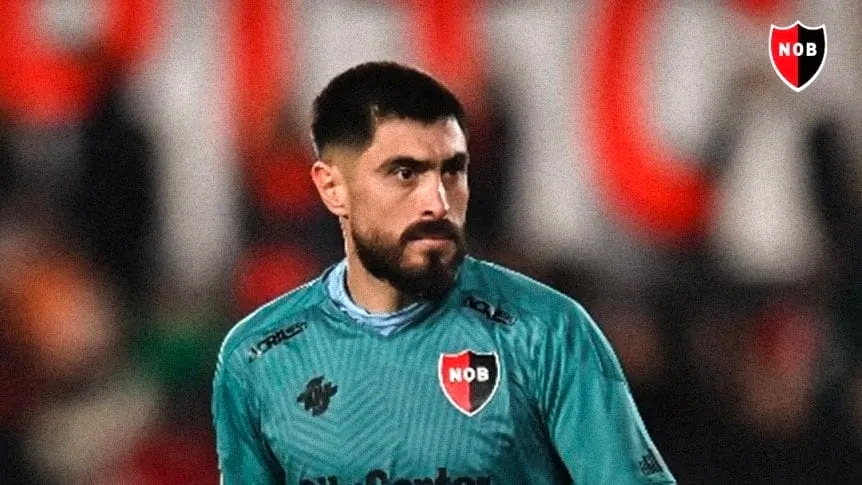
Atlanta United’s first goalkeeper signing of the post–Brad Guzan era is not nostalgic, cautious, or sentimental. It is philosophical.
By bringing in Lucas Hoyos, the club is signaling that the next phase of this roster will not be about minimizing mistakes. It will be about controlling matches - even if that control sometimes looks uncomfortable.
Hoyos arrives on a free transfer after a long rehabilitation, at age 36, with a resumé built not on celebrity but on trust from demanding managers and high-pressure environments. This is not a keeper signed to fade quietly into a backup role. This is a goalkeeper chosen to shape how Atlanta plays, and prepare it for the future.
Atlanta’s commitment reflects that balance. Hoyos is signed through the 2026 season, with club options for 2027 and 2028 - a structure that provides flexibility without long-term obligation. If the recovery holds and the fit works, Atlanta retains control. If it doesn’t, the club is not locked into a declining curve.
The ACL Tear
The concern around Hoyos’ health is real and unavoidable. In January 2025, while with *Newell’s Old Boys, he suffered a complete tear of the ACL in his right knee. For any player, that is a season-ending injury. For a goalkeeper in his mid-30s, it is often career-ending.
What makes this signing complicated is not the diagnosis, but the unknowns that follow.
Hoyos underwent surgery, completed a full rehabilitation cycle, and returned to Newell’s bench in October. He did not rush back. He did not shortcut recovery. By the time Atlanta moved to sign him, he was nearly eleven months removed from the injury - a timeline consistent with a full, uncomplicated ACL recovery.
But timelines are not guarantees.
At 36, recovery is not just about ligament strength. It is about trust - in planting, in lateral movement, in reaction moments that happen without conscious thought. Atlanta is betting that Hoyos is past that point. They are also hedging.
If Hoyos is not ready physically, or if the knee limits him early, Atlanta is not exposed. Jayden Hibbert remains available, already familiar with the league, the locker room, and the demands of MLS. That safety net matters, because this is not a zero-risk signing. It is a calculated one.
Atlanta did not sign a rehab project. They signed a goalkeeper with upside - and acknowledged downside.
Why This Goalkeeper Fits This Manager
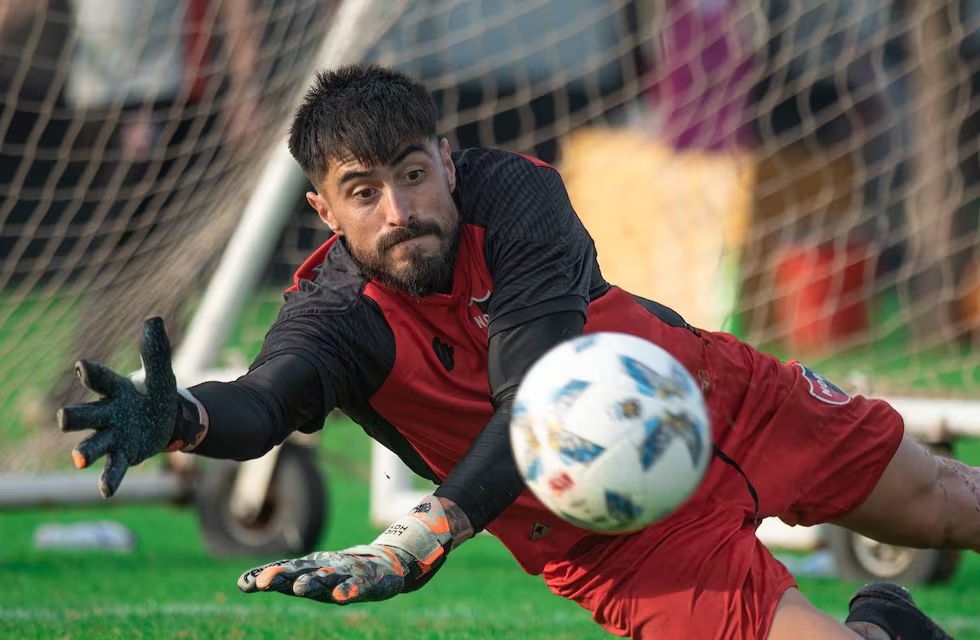
Hoyos’ appeal has never been about conservatism. It has always been about personality with the ball.
Under Gabriel Heinze, Hoyos was tasked with functioning as an active participant in possession, often positioning himself high to compress the field and invite pressure. Heinze once summarized Hoyos’ value succinctly:
“Lucas gives us the superiority we need. He has the courage to play when others would just clear it. You need a goalkeeper with that personality to play the way we want.” Gabriel Heinze
This mirrors what Tata Martino has previously demanded from his keepers. Hoyos is comfortable standing outside his box. He is comfortable holding the ball an extra second. He is comfortable being judged harshly when a risk fails.
The Anti-Guzan, by Design
Any discussion of Hoyos inevitably circles back to Brad Guzan, because the contrast is intentional.
Late-career Guzan was a deep, conservative goalkeeper. His distribution favored short, low-risk passes to centerbacks. His game was built on structure and stability, minimizing chaos rather than manipulating it. That approach brought calm - but it also limited Atlanta’s ability to break pressure without recycling possession.
Hoyos represents a deliberate shift.
Where Guzan stayed home, Hoyos steps forward. Where Guzan chose safety, Hoyos chooses leverage. Where Guzan reduced variance, Hoyos accepts it.
That contrast becomes even clearer when viewed alongside Jayden Hibbert.
Hibbert already shows a willingness to play longer than Guzan did, but his decision-making still skews cautious. Hoyos, by comparison, is aggressive by instruction. His long passing volume is higher. The system he played in wanted the press and exploit the space behind it. He looks to turn defensive moments into immediate attacking ones.
Shot-stopping reinforces the picture. In his most recent healthy seasons, Hoyos’ save percentage sits comfortably in the high-70s — a level that would have placed him among the better goalkeepers in MLS last year. Guzan and Hibbert, by contrast, both finished below league average, conceding more frequently from similar shot profiles.
The difference is not about effort or intent. It is about consequence.
Atlanta is prioritizing impact.
Starter, Bridge, or Both
Hoyos is not being signed to handhold.
He will compete directly with Hibbert. Hoyos arrives as the presumptive starter entering the 2026 preseason. His experience, command of the box, and willingness to shape possession give Atlanta something it has lacked - a goalkeeper who actively participates in how the team advances the ball.
At the same time, he functions as a bridge. If the knee holds and the rhythm returns, he stabilizes the position immediately. If it doesn’t, Atlanta has a younger option already embedded in the system.
That balance is intentional. It allows Atlanta to push forward without betting everything on one outcome.
What This Signing Really Says
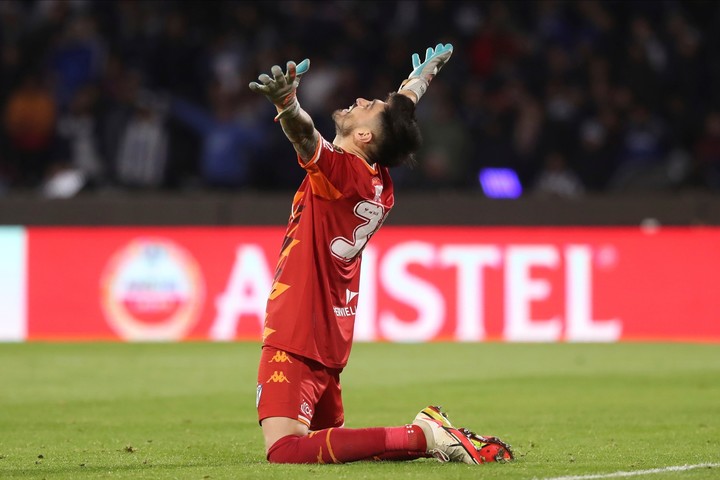
This is not a sentimental replacement for a club legend. It is a statement about identity.
Atlanta United did not sign Lucas Hoyos because he is safe. They signed him because he is decisive - with the ball, his voice, his positioning.
If the experiment works, Atlanta gains control in moments where it previously survived. If it fails, the failure will be loud, visible, and unmistakable.
But it will not be accidental.
And that, more than anything, is what defines the Hoyos signing.
ATLUTD VIPs ATLUTD · PLAYERS · SIGNING
ATLUTD signing