 {# Overlay logo in the middle of the banner, no layout shift #}


Atlanta United Coaching Performance (2017–2025)
Each Coach’s Record with Atlanta
Under Tata Martino, Atlanta set a high bar with the strongest overall league results.
He finished with 42 wins in 78 matches (53.8 percent) and a club-best 1.82 PPG, establishing the attacking identity that defined the club’s early years.
Frank de Boer actually recorded the highest win percentage at 56.3 percent, going 31-5-19 with a strong 1.78 PPG, though over a shorter tenure. His teams were efficient and disciplined, even if less free-flowing than Martino’s.
Stephen Glass took over a struggling side in 2020 and finished with 1.00 PPG, reflecting the difficult circumstances of that season.
Gabriel Heinze’s 2021 tenure produced 4 wins in 17 matches (23.5 percent) and 1.18 PPG, a poor return that contributed to his midseason dismissal.
Interim manager Rob Valentino provided a steady hand across two caretaker stints. His combined 31-match record produced 10-8-13 and a respectable 1.23 PPG, highlighted by a strong revival in 2021.
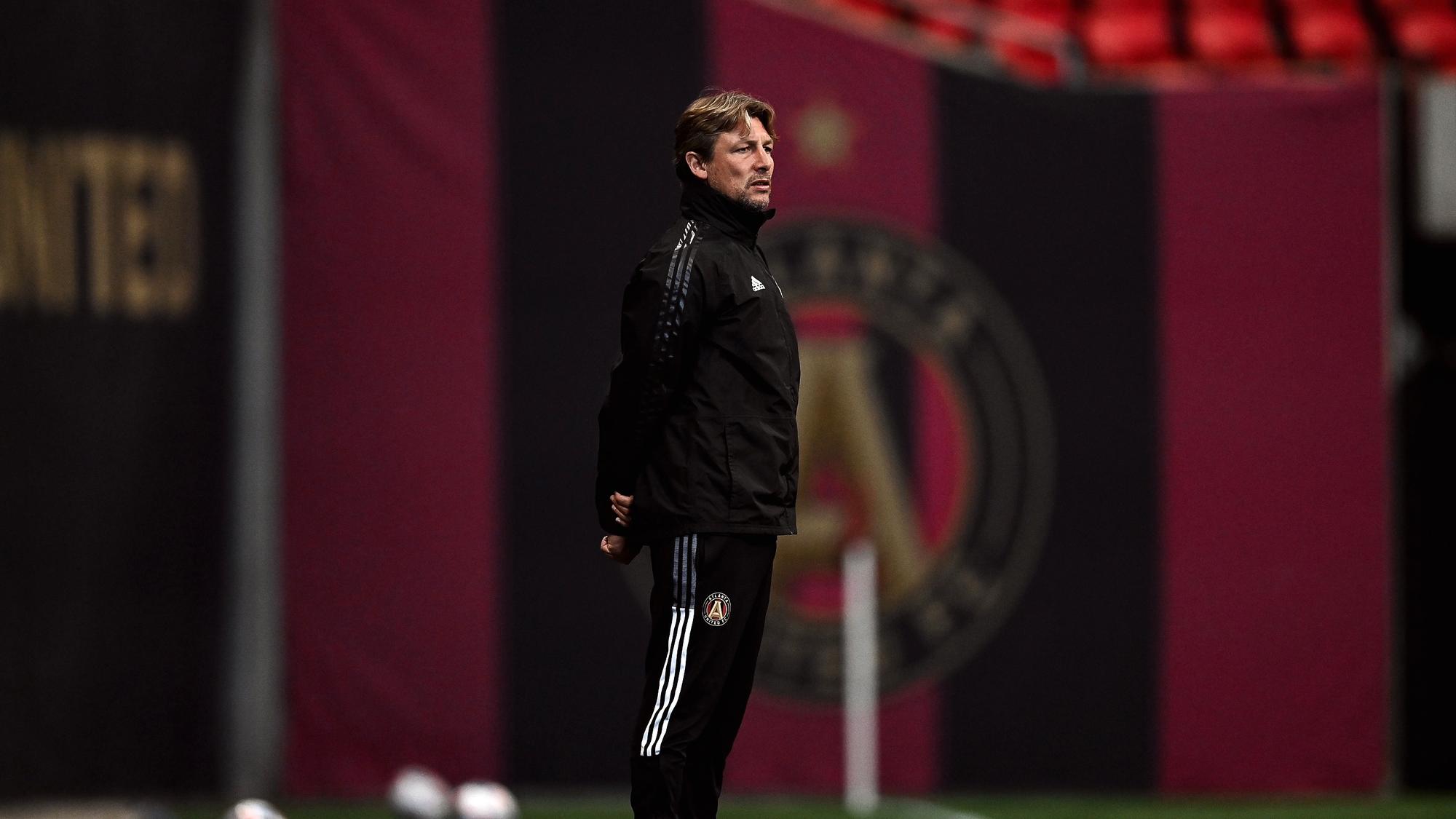
Gonzalo Pineda oversaw the most matches of any post-Martino coach, finishing with a balanced 38-29-41 record and 1.32 PPG, reflecting an era defined by inconsistency.
Ronny Deila’s lone 2025 season was the club’s worst on record, finishing 6-13-18 (16.2 percent) with just 0.84 PPG, prompting his exit.
| Head Coach ( Tenure ) | Matches | Record (W-D-L ) | Win % | PPG |
|---|---|---|---|---|
| Tata Martino (2017–2018) | 78 | 42-16-20 | 53.8% | 1.82 |
| Frank de Boer (2019–2020) | 55 | 31-5-19 | 56.3% | 1.78 |
| Stephen Glass (Interim 2020) | 19 | 5-4-10 | 26.3% | 1.00 |
| Gabriel Heinze (2021) | 17 | 4-8-5 | 23.5% | 1.18 |
| Rob Valentino (Interim 2021 & 2024) | 31 | 10-8-13 | 32.3% | 1.23 |
| Gonzalo Pineda (2021–2024) | 108 | 38-29-41 | 35.2% | 1.32 |
| Ronny Deila (2025) | 37 | 6-13-18 | 16.2% | 0.84 |
Postseason and Other Competitive Results
Atlanta’s fortunes in cup competitions varied significantly under each coach. MLS Cup Playoffs
Martino led Atlanta to the playoffs in both of his seasons, with a first round exit in 2017 followed by an MLS Cup championship in 2018. Frank de Boer kept Atlanta postseason bound in 2019, reaching the Eastern Conference Final after two playoff wins before falling one match short of MLS Cup. In 2020 the team failed to qualify, ending the Martino and de Boer era of consistent playoff appearances.
Under Pineda, Atlanta qualified for the playoffs in 2021 and 2023, but both runs ended in the first round. In 2021 the club lost to NYCFC, and in 2023 they fell in the best of three opening series.
Rob Valentino, in his second interim stint in 2024, successfully steered Atlanta back into the postseason. The club returned to the playoffs under his leadership, even though his role was temporary. His first interim spell in 2021 came too late in the season to change the playoff picture.
Stephen Glass’s interim tenure in 2020 ended with the team below the line, and Heinze was dismissed before the 2021 playoff push. Deila’s 2025 squad also failed to qualify, finishing 14th in the Eastern Conference.
U.S. Open Cup
Atlanta won the U.S. Open Cup in 2019 under Frank de Boer, the last major trophy the club has lifted to date. Martino never advanced past the Round of 16, with exits in both 2017 and 2018. Since then, Atlanta’s Open Cup fortunes have been poor. Under Pineda, the club was eliminated by Nashville SC in 2022 and suffered a notable upset loss to Memphis 901 FC in 2023. Interim managers Glass and Valentino did not oversee deep runs (the 2020 tournament was canceled, and Atlanta’s 2024 exit occurred before Valentino took over). Heinze did not coach an Open Cup match because the competition was not held in 2021. Aside from de Boer’s triumph, no other Atlanta manager has advanced past the early rounds of the Open Cup.
CONCACAF Champions League (CCL)
Martino never coached Atlanta in CCL play. The club’s first participation came after his departure. Frank de Boer led Atlanta to two consecutive quarterfinal appearances. In 2019 the team defeated Herediano in the Round of 16 before falling to Monterrey. In 2020 Atlanta advanced past Motagua, but due to the pandemic delay the rescheduled quarterfinal against Club América was completed under interim manager Stephen Glass, who officially oversaw the second leg and the elimination.
Gabriel Heinze managed Atlanta in the 2021 edition, advancing past Alajuelense in the Round of 16 before losing to the Philadelphia Union in the quarterfinal. Since 2022 Atlanta has not qualified for the CCL, so neither Pineda nor Deila coached a match in that competition. De Boer remains the only Atlanta coach to win an international trophy, the 2019 Campeones Cup, though it is a one match final rather than a continental tournament.
Leagues Cup
Martino and de Boer both predated the Leagues Cup era. Atlanta’s first appearance came in 2023 under Pineda, ending in a group stage exit that included a heavy defeat to a Lionel Messi led Miami. In 2024, interim manager Valentino oversaw the team during Leagues Cup, and the club again failed to advance from the group. Deila’s 2025 squad also bowed out early. No Atlanta coach has yet produced a significant run in the Leagues Cup, and several coaches never had the opportunity to participate due to the tournament’s evolving format.
Playing Style, Squad Usage, and Fan Sentiment Under Each Coach
Gerardo Martino (2017–2018)

Under Martino, Atlanta played a fast, high-tempo attacking style built on aggressive pressing and vertical transitions. His teams regularly dictated matches with roughly 56 percent possession and sustained pressure in the attacking third. The offense revolved around Miguel Almirón’s creativity and Josef Martínez’s finishing, with the group averaging approximately 2.3 expected goals per match while conceding around 1.3. The structure was dynamic but disciplined, and Martino relied on a stable core lineup supported by timely substitutions, often using players like Tito Villalba or Julian Gressel to shift the rhythm of a match.
Fan sentiment toward Martino remains overwhelmingly positive. He delivered an MLS Cup, established Atlanta’s identity, and produced some of the most entertaining soccer in the league. His teams regularly drew more than 50,000 supporters to Mercedes-Benz Stadium, a reflection of both their style and results. For many supporters, Martino set the benchmark for what Atlanta United should aspire to be.
Frank de Boer (2019–2020)
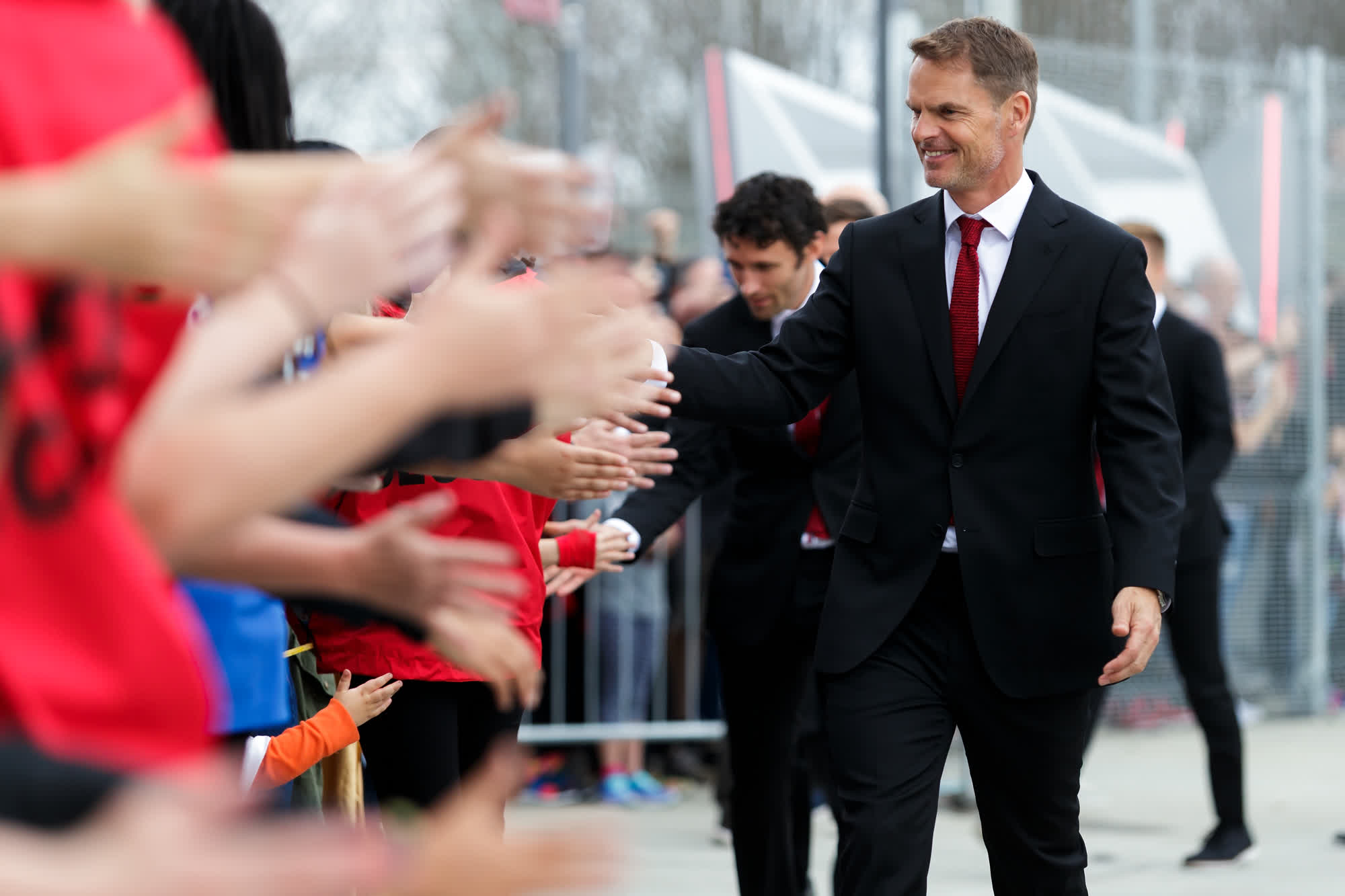
Frank de Boer introduced a more methodical, possession-oriented approach. Atlanta still dominated the ball at roughly 55 percent possession, but the buildup became slower and more deliberate compared to Martino’s free-flowing attack. The scoring output dipped, and at times the offense looked predictable, but de Boer tightened the defense and improved game management. Despite stylistic friction, his teams produced strong results, winning the U.S. Open Cup and Campeones Cup in 2019 and finishing with one of the highest points-per-game marks in club history.
De Boer rotated heavily during the congested 2019 calendar, balancing MLS, Champions League, and two domestic cups. However, tactical disagreements emerged, most notably with Pity Martínez, who struggled to fit into de Boer’s structure. Fan sentiment during this period was mixed. Some appreciated the trophies, while others disliked the shift away from Atlanta’s original attacking identity. The slide in the 2020 MLS Is Back Tournament, where Atlanta lost all three matches, became the breaking point. The mutually agreed departure that followed signaled the club’s desire to move in a different direction.
Stephen Glass (Interim 2020)
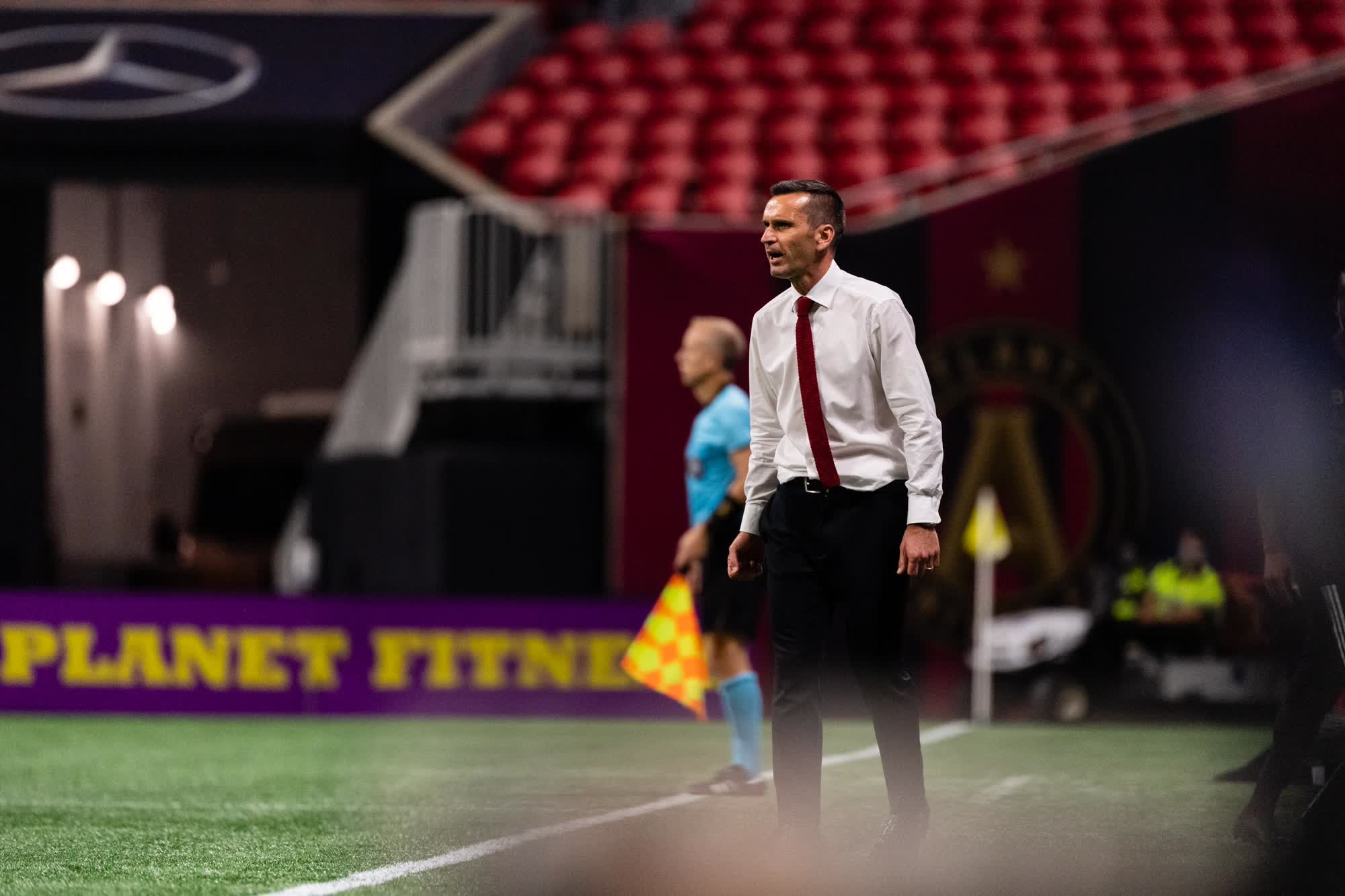
Stephen Glass stepped in as interim manager during a chaotic 2020 season. With Josef Martínez out long-term and Pity Martínez sold late in the year, Glass was tasked with steadying the side rather than reinventing it. Atlanta maintained roughly 54 percent possession, but lacked the attacking quality needed to convert chances, scoring just 19 goals in 18 matches. Glass leaned on younger players and fringe options, experimenting with lineups and substitutions in search of a spark.
The results were understandably limited, and Atlanta missed the playoffs for the first time in its MLS history. Fan sentiment was generally sympathetic. Few blamed Glass for the downturn, recognizing that the circumstances of 2020 placed him in a near-impossible position.
Gabriel Heinze (2021)
Gabriel Heinze arrived with a reputation for high-intensity, Bielsa-influenced football and generated significant excitement among supporters looking for a bit of normalcy as the league attempted to return to play. His Atlanta team frequently held the ball, averaging close to 59 percent possession, and pressed aggressively. However, the approach did not translate into productivity. Atlanta scored only 13 goals in 13 matches and often struggled to create high-quality chances, averaging near 1.1 expected goals per game.
The on-field issues were soon overshadowed by off-field problems. Heinze’s strict training methods, limited rest periods, and fractious relationship with players created tension inside the club. His public conflict with Josef Martínez further damaged morale. By July, Atlanta had won only two league matches, and internal discord made his dismissal inevitable. Fan sentiment shifted rapidly from enthusiasm to frustration. Heinze’s tenure is widely viewed as a cautionary tale about intensity without balance.
Rob Valentino (Interim 2021 and 2024)
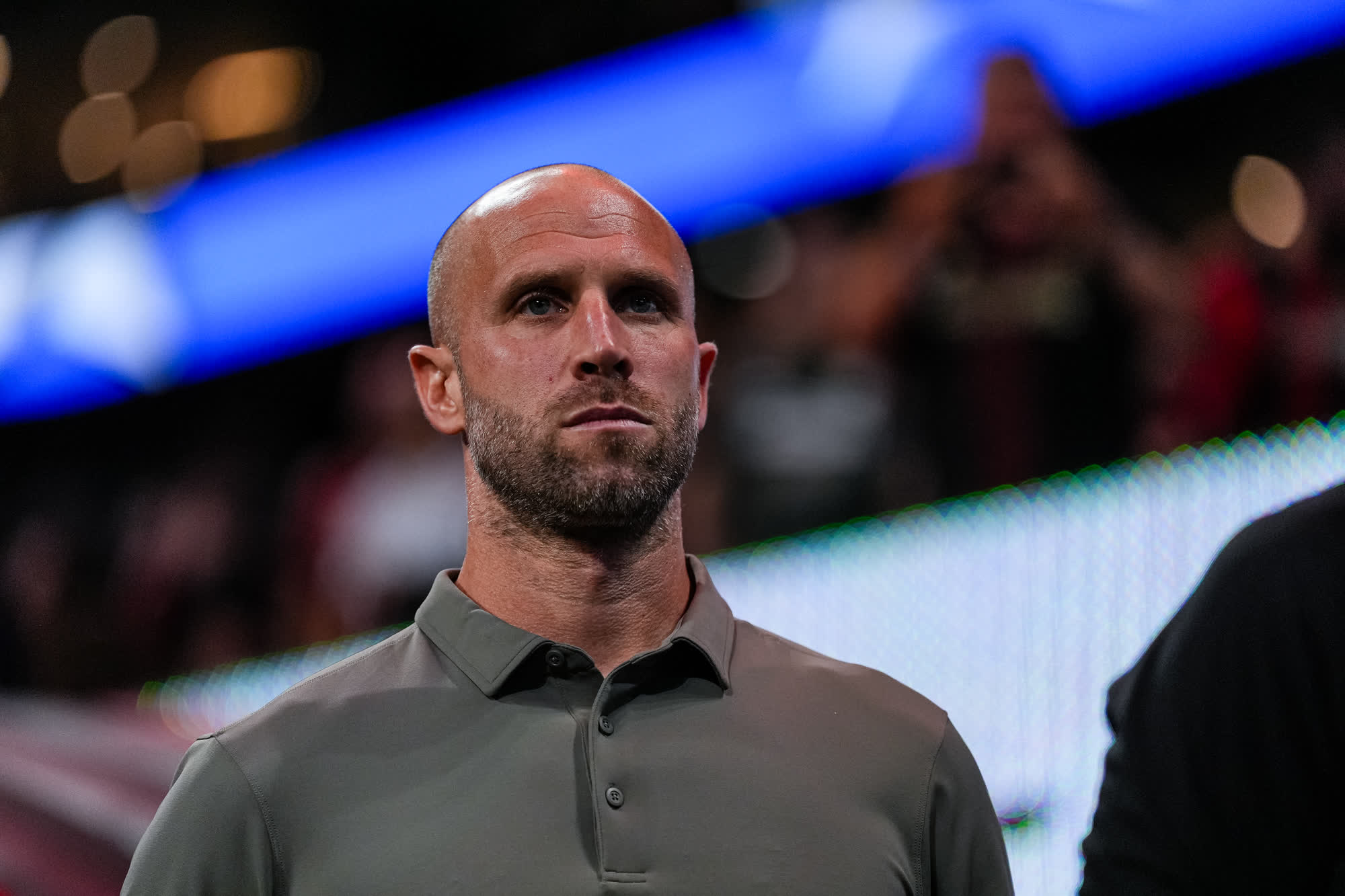
Rob Valentino twice stepped into the interim role and twice managed to stabilize the team. In 2021 he transformed the mood almost immediately, guiding Atlanta to a 4-2-2 record and reviving the attack by restoring Josef Martínez to a central role. Confidence returned, and the team’s chance creation improved noticeably. Supporters responded warmly, crediting Valentino with rescuing the season and restoring joy to the squad.
In 2024 he again took over during a difficult spell. This time he adopted a more pragmatic approach, reducing possession to around 45 percent and leaning on a counterattacking structure to grind out results. The record was even at 6-6-6, but he succeeded in making Atlanta competitive again and ultimately steering the club into the playoffs. Throughout both periods, Valentino emphasized communication, simplicity, and player empowerment. Fans consistently view him as a positive influence and a steady hand, even when the team around him was in transition.
Gonzalo Pineda (2021–2024)
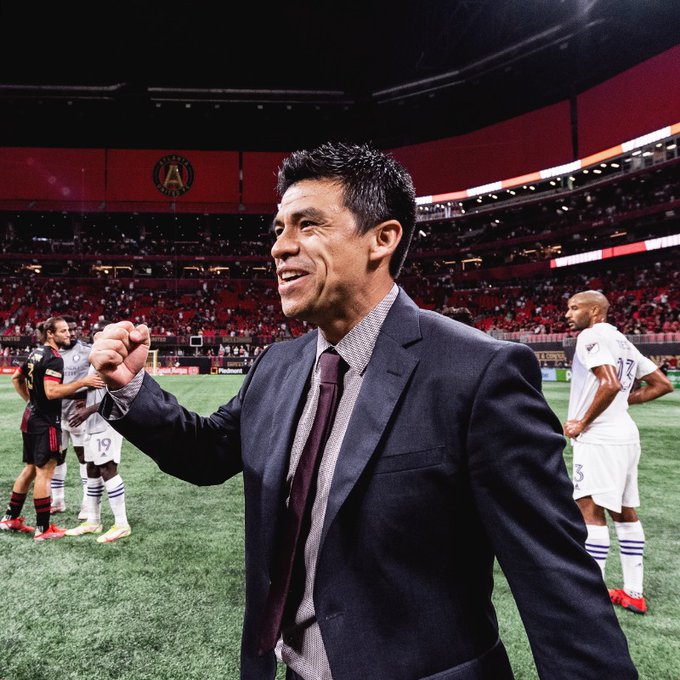
Gonzalo Pineda arrived as a tactically refined coach steeped in Seattle’s philosophy of balanced, possession-based play. His Atlanta teams typically held roughly 56 percent possession and averaged around 1.54 expected goals for and 1.37 against. In principle the approach provided a slight edge, but in practice the margins were thin and the inconsistency was glaring. The 2022 season was derailed by injuries, forcing Pineda to shuffle lineups constantly. The team missed the playoffs and fan frustration grew. In 2023, with attackers such as Giorgos Giakoumakis and Thiago Almada, the forward press flourished and Atlanta returned to the postseason, but defensive lapses persisted. Pineda alternated between a 4-2-3-1 and occasional back-three systems in an attempt to find stability. His substitution patterns often drew scrutiny, and the club struggled to maintain momentum.
By mid-2024, Atlanta had fallen to 13th with a 4-8-4 record. Fan sentiment had eroded significantly, and Pineda was dismissed in June. His tenure remains the longest since Martino’s and included two playoff appearances, but the broader impression is one of unfulfilled potential and uneven execution.
Ronny Deila (2025)
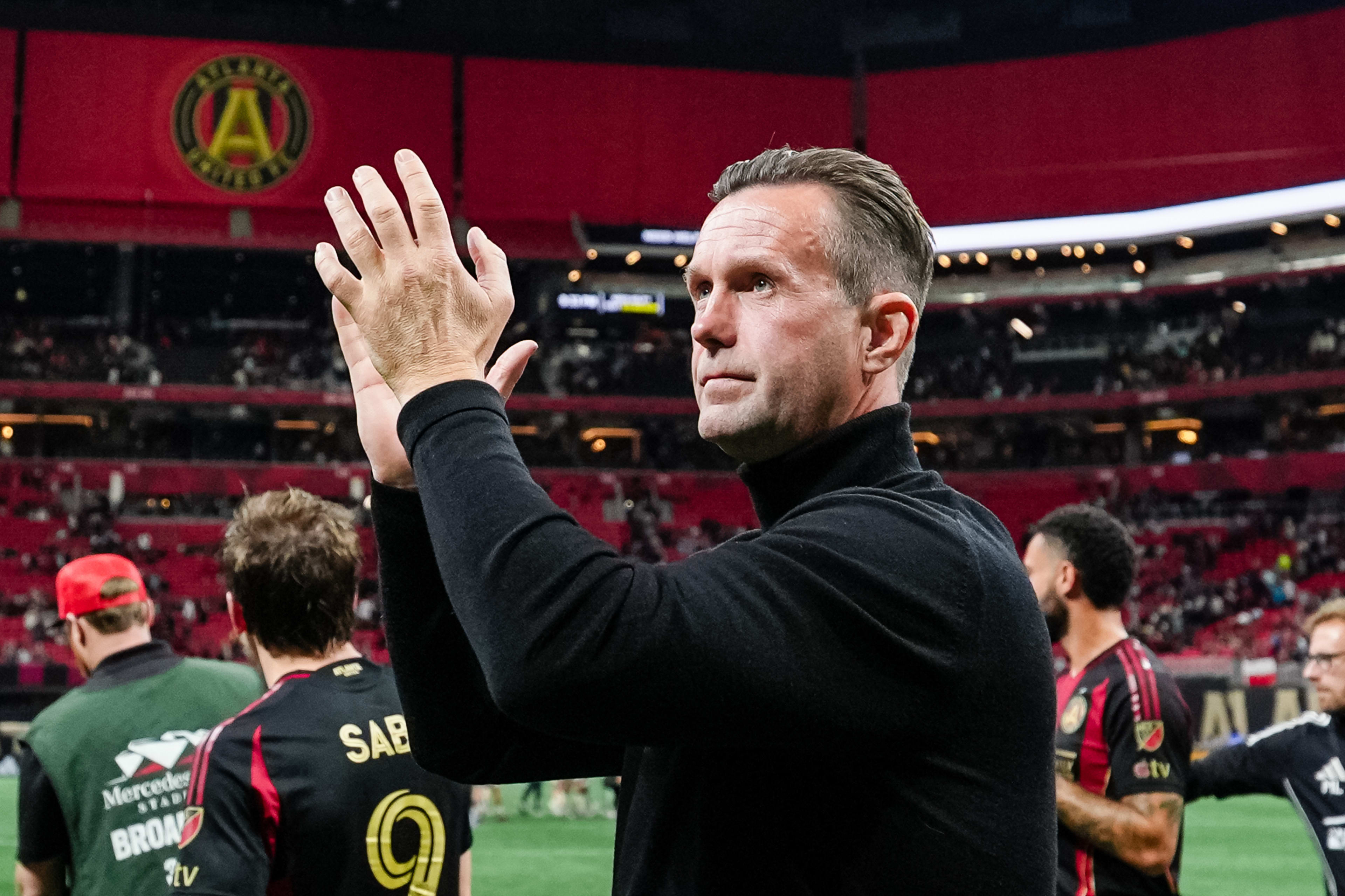
Ronny Deila arrived tasked with reestablishing structure and intensity, but the 2025 season quickly unraveled. Although Deila had previously succeeded with Celtic and New York City FC, his Atlanta team never found its footing. The defense conceded 63 goals in 34 matches, the worst mark in club history, while the attack managed only 38 goals. The performances lacked cohesion, and lineup changes provided little improvement.
Fan sentiment reached a low point as the losses accumulated and attendance declined. By the end of the season, club leadership acknowledged that standards had not been met, and Deila was dismissed at its conclusion. His tenure is broadly regarded as a missed opportunity, though he inherited a roster already trending downward. The club’s immediate decision to pursue a reset, eventually bringing back Tata Martino, underscored the desire to return to the identity that defined the earliest years.
Since Leaving Atlanta
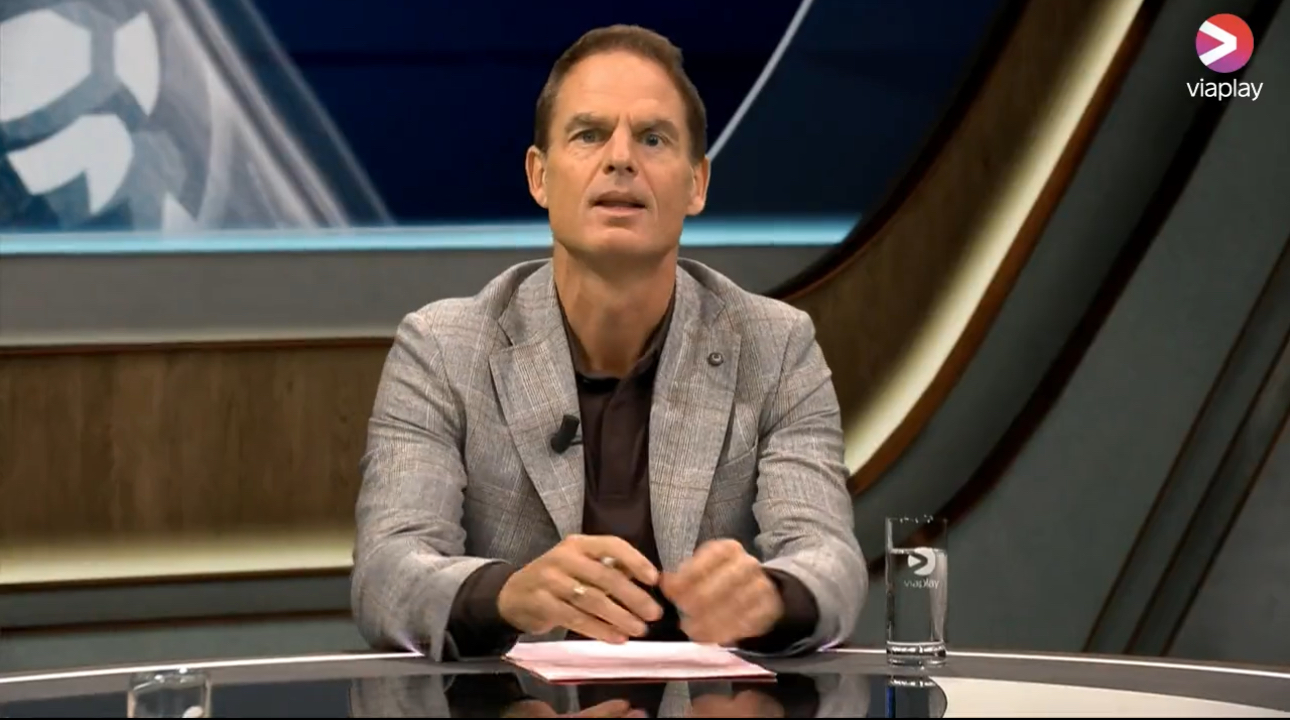
Frank de Boer’s most successful work remains his first major appointment at Ajax, where he won four Eredivisie titles and a Super Cup across six seasons. He stepped down after 263 matches in charge, a level of stability he has never replicated since. His tenure with Atlanta United stands as the longest stretch of his post Ajax career, covering 55 matches. Every other stop - Crystal Palace, Inter Milan, the Netherlands, and Al-Jazira - has lasted 15 matches or fewer.
After leaving Atlanta, de Boer moved into international management, taking charge of the Netherlands for 15 matches between 2020 and 2021. His time ended shortly after a poor showing in the European Championship group stage. In 2023 he accepted the head coaching role at Al-Jazira in the UAE, where he was expected to steady the club and mount a title challenge. Instead, results stalled, and he was released in December with the team stuck in mid-table.
Across these later chapters, a pattern has emerged: difficulty in tournament environments, prolonged losing runs, and strained relationships with club leadership. De Boer remains well known and experienced, but he now sits in a familiar professional limbo - between high-profile roles, still searching for a long-term project that fits.
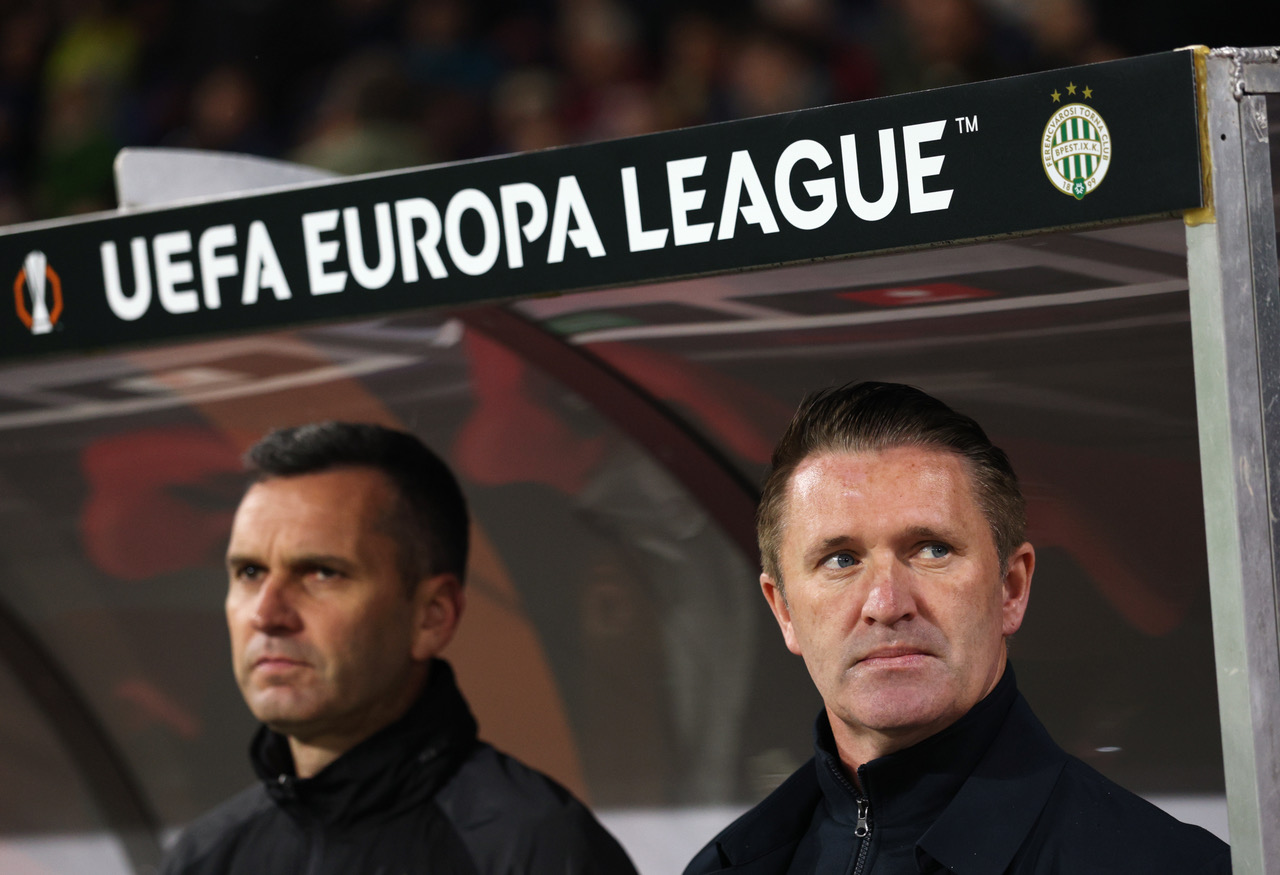
Stephen Glass entered the head coaching role at Atlanta United during one of the most unsettled periods in the club’s history, taking over as interim manager following Frank de Boer’s exit in 2020. His mandate was not to overhaul the system but to stabilize it, reconnecting players to a more straightforward and less restrictive approach. Though his stint was brief, it provided a necessary reset during a season disrupted by injuries, scheduling changes, and inconsistent form.
When his interim role concluded, Glass returned to lead Atlanta United 2, ultimately doing enough to earn the managerial position at Aberdeen. The project began with optimism but quickly revealed the challenges of rebuilding a side undergoing structural change. Results failed to meet expectations, and he was dismissed in early 2022. What followed was a move to Memphis 901 FC, where he remained in charge until the club folded in 2024.
Glass is now assistant manager to Robbie Keane at Ferencvárosi TC in Hungary, continuing a steady career built around player development and transitional projects.
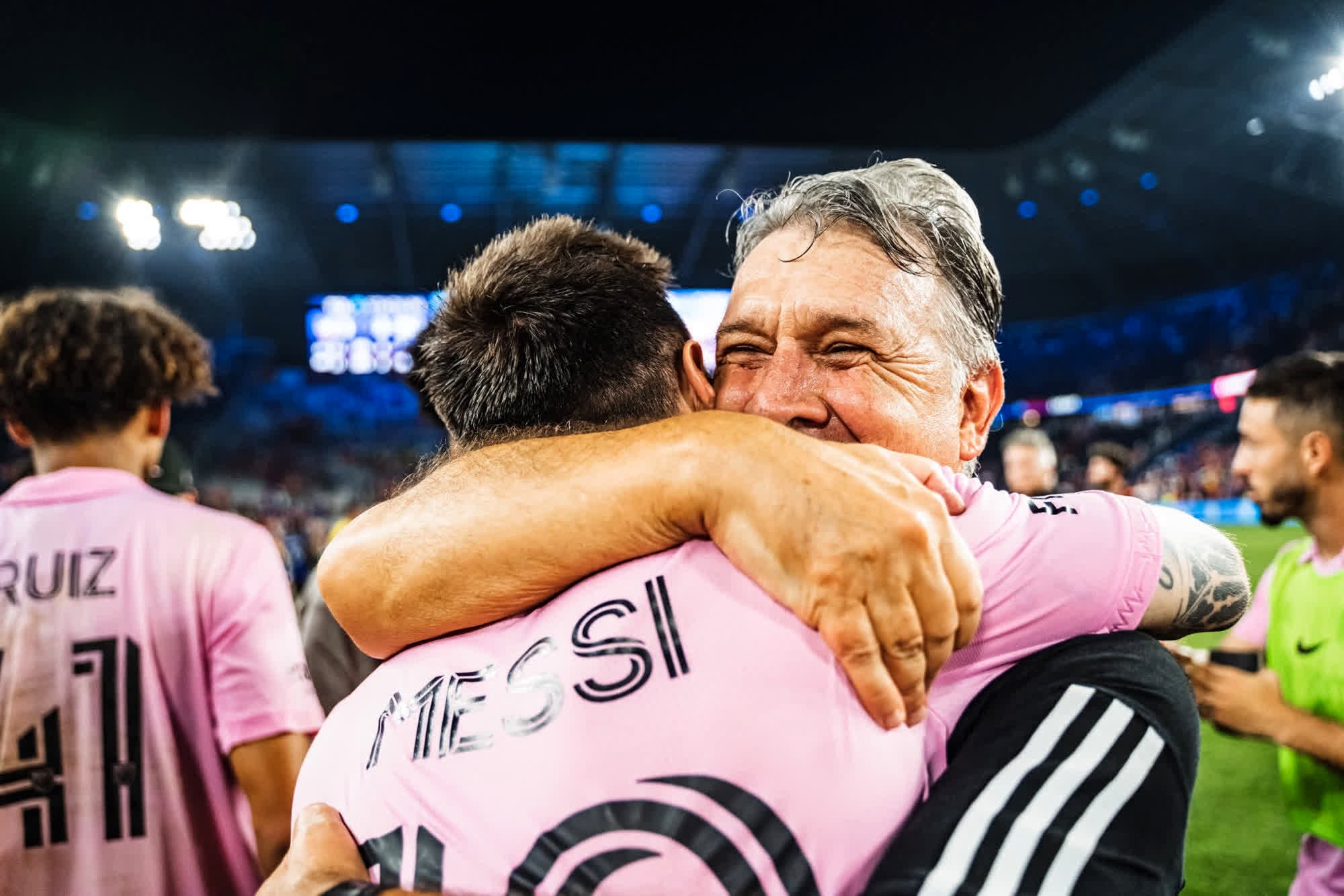
Tata Martino’s tenure in Atlanta remains one of the most influential periods of his managerial career. His two seasons with the club established its tactical identity and produced an MLS Cup title, accomplishments that stand alongside the strongest portions of his work with Newell’s Old Boys and Paraguay. His time at Barcelona and the Argentina national team had been marked by limited control and inconsistent results, but Atlanta offered him a platform where his principles - verticality, tempo, and player expression - translated into consistent success.
After departing at the end of 2018, Martino took charge of the Mexico national team, guiding them through the 2022 World Cup cycle. His tenure there produced a mix of strong moments and contentious periods, ultimately ending after a disappointing group-stage elimination. In 2023 he returned to MLS with Inter Miami, where he reunited with Lionel Messi and helped guide the club through a high-profile rebuild. The results fluctuated, but Martino’s tactical clarity and man-management again became defining strengths.
Martino then led Inter Miami to the 2024 MLS Supporters’ Shield, setting a league-record number of points. But it proved to be short of those sky-high expectations for Miami and Messi, who were ousted from the playoffs by a struggling team. I cannot recall which team that was.

Gabriel Heinze arrived in Atlanta with a reputation as an intense, tactically meticulous manager shaped by successful spells in Argentina. Expectations were high, but his time with the club unraveled quickly. Heinze’s demanding structure, heavy training load, and strict interpersonal approach clashed with the squad from the outset. His tenure lasted only 17 matches, marked by limited attacking output, internal tension, and an eventual breakdown in trust. His conflict with Josef Martínez became emblematic of a broader disconnect between his methods and the realities of MLS.
After departing midseason in 2021, Heinze returned to Argentina to take charge of Newell’s Old Boys, where he attempted to restore the methodical, possession-heavy approach that had defined his earlier success. Results were mixed, and he left without making a lasting impact. He has since taken on a first-team coaching role with Arsenal in the EPL, shifting from the pressures of leading a club to the more focused responsibilities of technical development and training design.
Heinze’s post-Atlanta path suggests a manager with strong tactical beliefs but difficulty adapting them across different environments. His stint with the Five Stripes remains the shortest and most turbulent stop of his career, and his move into an assistant role reflects a recalibration of his place within the coaching landscape.
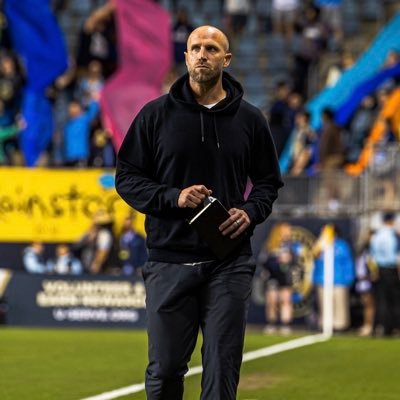
Rob Valentino twice stepped into the Atlanta United head coaching role on an interim basis, first in 2021 and again in 2024, each time serving as a stabilizing presence during periods of transition. His leadership style - direct, positive, and grounded - consistently resonated with players, allowing him to restore confidence and improve performances without dramatically altering the tactical structure. His influence was measured less by results and more by his ability to calm internal turbulence and reconnect the squad to a simpler, more expressive approach.
Valentino left Atlanta United at the end of the 2024 season after being informed he lacked the resumé to lead the club on a permanent basis. He quickly landed on his feet, joining the U.S. Men’s National Team program as the head coach of the U19 squad, where his player-first communication style and developmental focus are well aligned with the role.
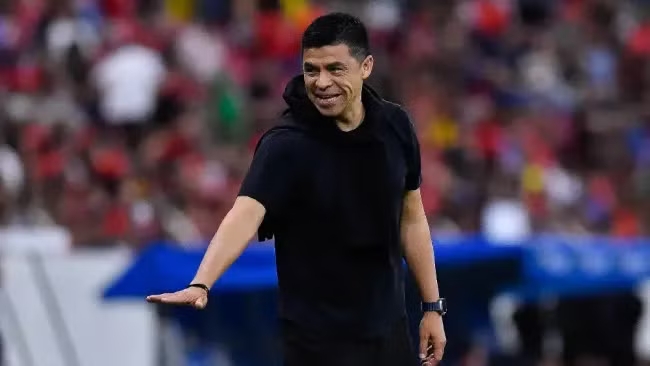
Gonzalo Pineda arrived in Atlanta with considerable promise, having built a strong reputation as a tactically thoughtful assistant at Seattle. Over more than 100 matches in charge, he delivered stretches of polished, possession-oriented football, but his tenure was defined just as much by diminishing returns. Moments of creativity and flow were often followed by extended periods of stagnation, and the team struggled to sustain momentum across full seasons. The gap between the club’s desired identity - aggressive, vertical football - and the tempo of Pineda’s approach remained a persistent tension.
After leaving Atlanta United in June 2024, Pineda took the head coaching role at Atlas FC in Liga MX that December. His tenure there was brief; he resigned in August after a series of poor results and slipped defensive performances.
Ronny Deila joined Atlanta United in late 2024 with a mandate to reintroduce intensity, directness, and a clearer attacking identity. Although his resumé included strong work at Celtic and a well-regarded tenure at New York City FC, his Atlanta spell proved far more challenging than expected. The team struggled with cohesion and consistency throughout the 2025 season, where injuries, roster gaps, and tactical misalignment combined to derail momentum early. By October, the club had recorded only five league wins and finished second from the bottom of the combined table, leading to Deila’s departure after a single campaign.
Conclusion
Over its first nine seasons, Atlanta United experienced dramatic swings under different coaches, from Martino’s trophy winning, high tempo style to the more subdued but silverware producing pragmatism of de Boer, through interim stabilizers and experimental hires that produced mixed results. When focusing strictly on competitive matches and filtering out friendlies and exhibitions, the regular season metrics and cup records clearly identify Martino’s tenure as the high point, with de Boer close behind in terms of on field success. The managers that followed struggled to sustain Atlanta’s early dominance, and while their tactical philosophies ranged widely from aggressive attacking play to cautious possession to high press approaches, consistent success proved elusive.
Fan support remained strong throughout this period. Atlanta continued to draw some of the largest crowds in MLS, a testament to the foundation built in the early years. However, patience gradually thinned as performances declined after 2019. The coach by coach breakdown above offers a clearer, competition filtered view of Atlanta United’s trajectory and reinforces the idea that the club’s identity and results have always been closely linked to its managerial leadership.
As Atlanta prepares for 2026, the lessons from each era remain relevant. Martino’s attacking identity, de Boer’s structural balance, and the turmoil that followed all serve as reminders of what has worked, what has not, and what the supporters expect. The club’s challenge now is to recapture the standards of its earliest seasons and restore the winning culture that defined Atlanta United at its best.
ATLUTD VIPs ATLUTD · COACHES