 {# Overlay logo in the middle of the banner, no layout shift #}


Game Day
Atlanta United 0-2 New England Revolution - A Second-Half Unraveling
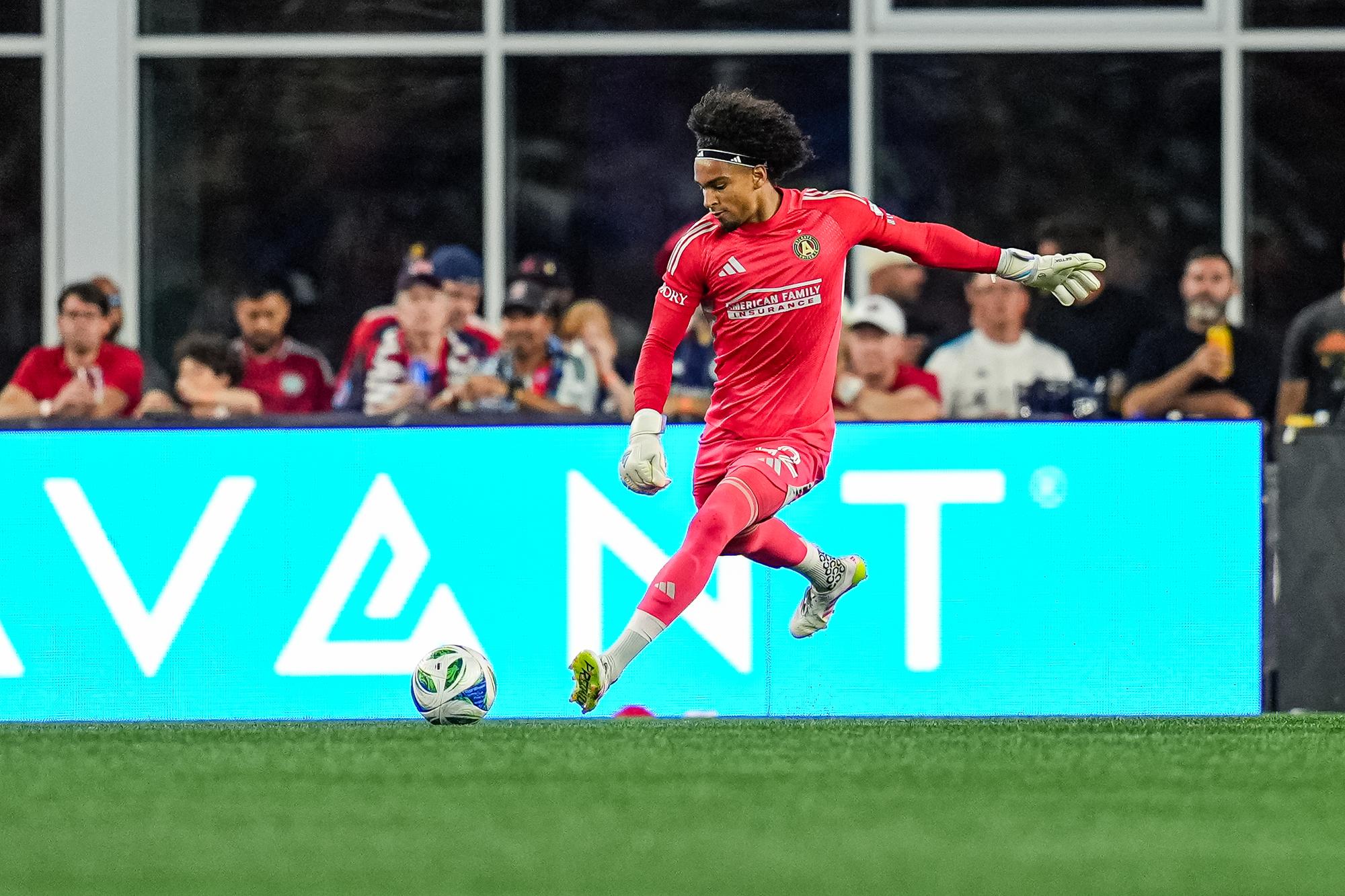
Context
Both teams entered the match already eliminated from postseason contention. Atlanta were unchanged from last week: Hibbert; Amador, Berrocal, Gregersen, Hernández; Alzate and Slisz; Almirón, Miranchuk, Saba behind Thiaré.
New England started Turner; Fofana, Beason, Ceballos; Polster, Oyirwoth; Bye, Sands, Gil; Chancalay and Langoni sharing the front line.
Referee: Nabil Bensalah for his MLS debut.
Stats courtesy of FotMob
First Half: Initiative Without Reward
Atlanta controlled the match for the opening half hour. They swarmed on loss, pressed well, and tilted the field into New England’s half. Almirón operated centrally and deeper than Miranchuk to connect play; Amador combined with him repeatedly down the left. Saba’s early free kick flashed just wide. Hibbert was largely untroubled.
The issue was familiar: territory without threat. Atlanta’s best sequences died on the final ball—overhit crosses, under-hit flicks, heavy touches at the edge of the box. By the time New England settled, the window to capitalize had closed.
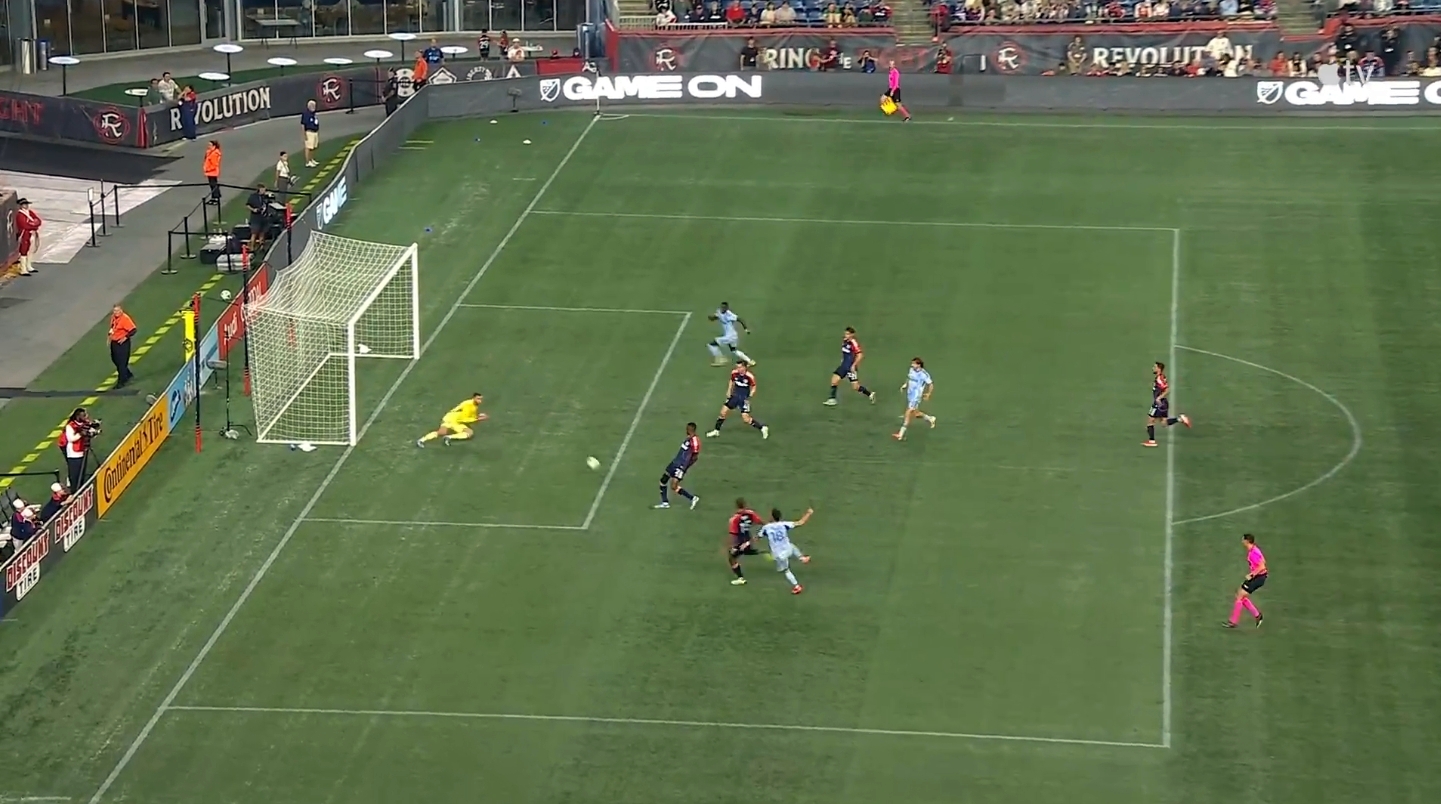
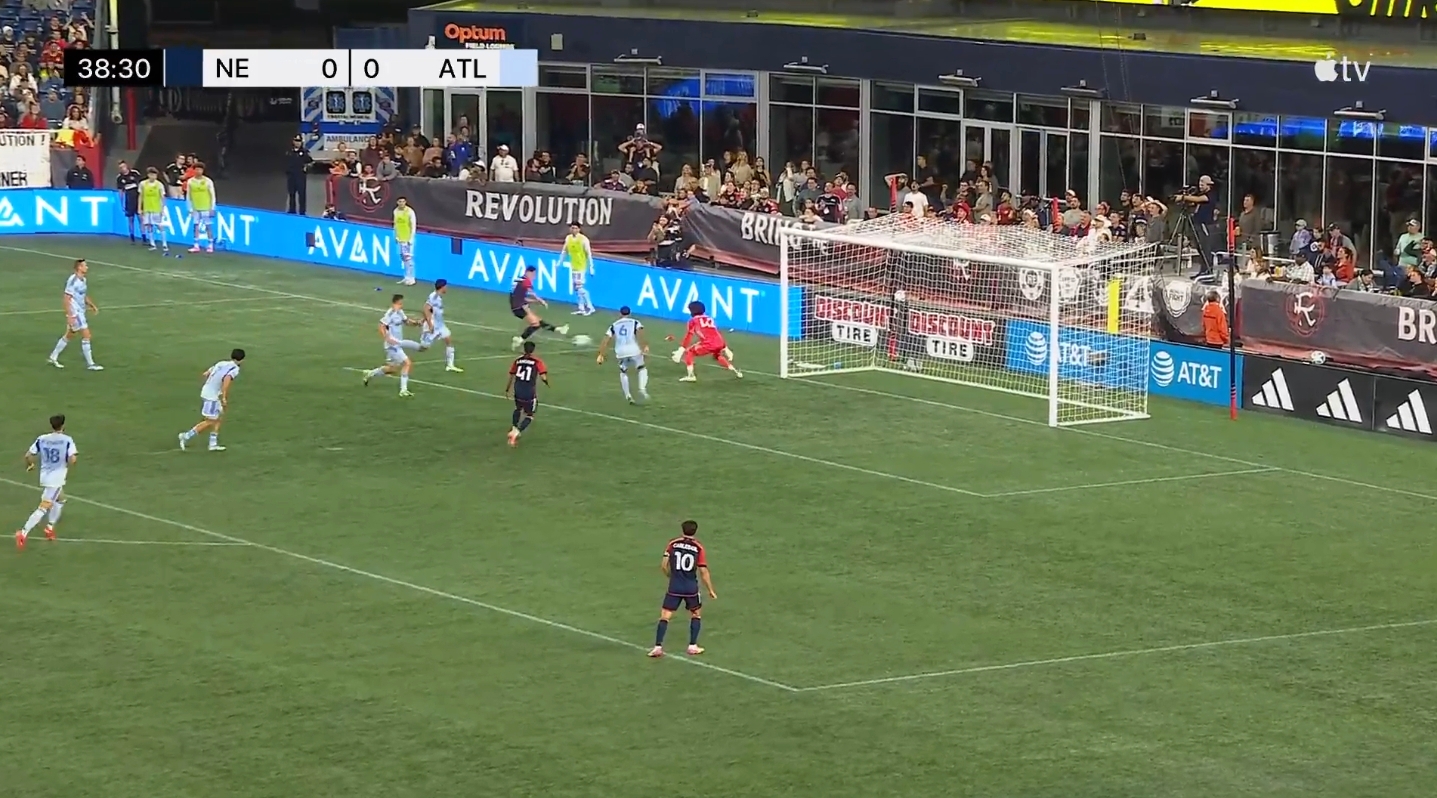
In the 38th minute, New England’s Chancalay slipped behind Atlanta’s back line and fired a shot on goal. The danger wasn’t just the attempt itself - two additional Revolution runners were unmarked at the back post. Atlanta escaped, but this was an early warning sign of defensive issues. It foreshadowed the breakdowns that would decide the second half. Crucially, it was not corrected at halftime.
Halftime numbers told the story of an even contest (NE–ATL: xG 0.28–0.52, shots 7–8, box touches 5–13), but the score remained 0–0. Atlanta’s control yielded no clear, repeatable chance.
Second Half - Control Lost, Points Gone
New England restarted with clarity and edge. The match immediately became chaotic; Atlanta’s midfield spacing loosened, the press lost cohesion, and NE began to find free runners (Sands repeatedly) on the back line’s blind side.
- 50’–55’: Two quick New England looks—one off the bar, one wide across goal—signaled the turning point for all to see.
- 58’: Substitute Yusuf arrived and stabilized New England’s midfield; tempo and field position swung to the visitors.
- 63’: Turgeman’s first involvements exposed Atlanta’s right channel; Gregersen executed two emergency recoveries, but the warning was clear.
- 64’: Thiaré subbed off for Latte Lath - Atlanta lost their best presser and focal point up front. The ball stopped sticking; pressure moments faded.
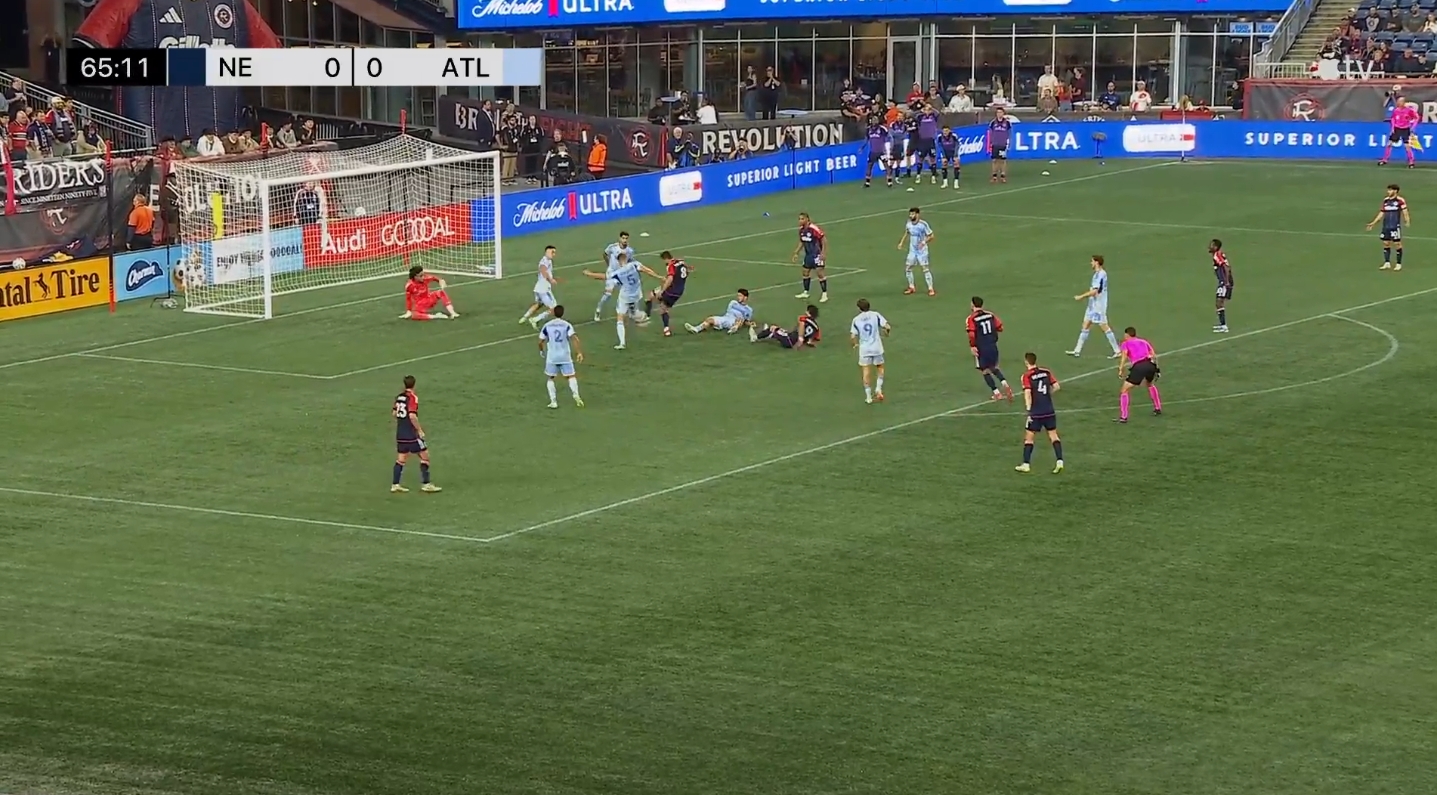
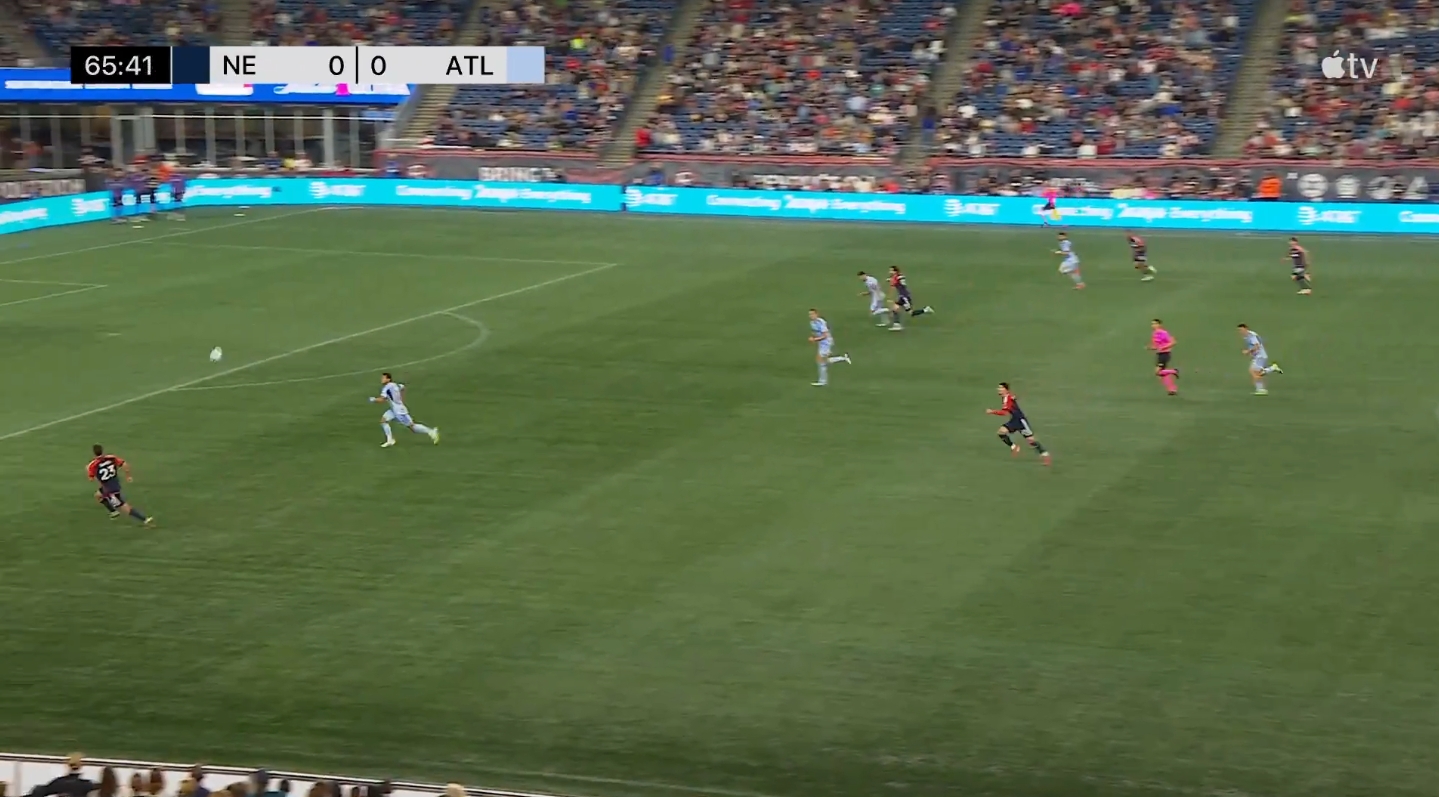
- 65’: chaos reigned inside Atlanta’s box. A loose ball sparked a scramble, but the problem was positional: most Atlanta defenders were static, ball-watching. In contrast, multiple New England players were already poised around the play, unmarked and anticipating the clearance. Atlanta survived this moment, but the pattern was decisive - New England were switched on, Atlanta were not.
- 65’: New England’s right back delivered a switch of play that carved Atlanta open. Sands received the ball wide with no marker in sight, free to advance. This was not an isolated lapse - it highlighted how Atlanta’s defensive spacing collapsed after halftime. Long diagonals and switches consistently found New England runners, with Atlanta’s midfield and back line disconnected.
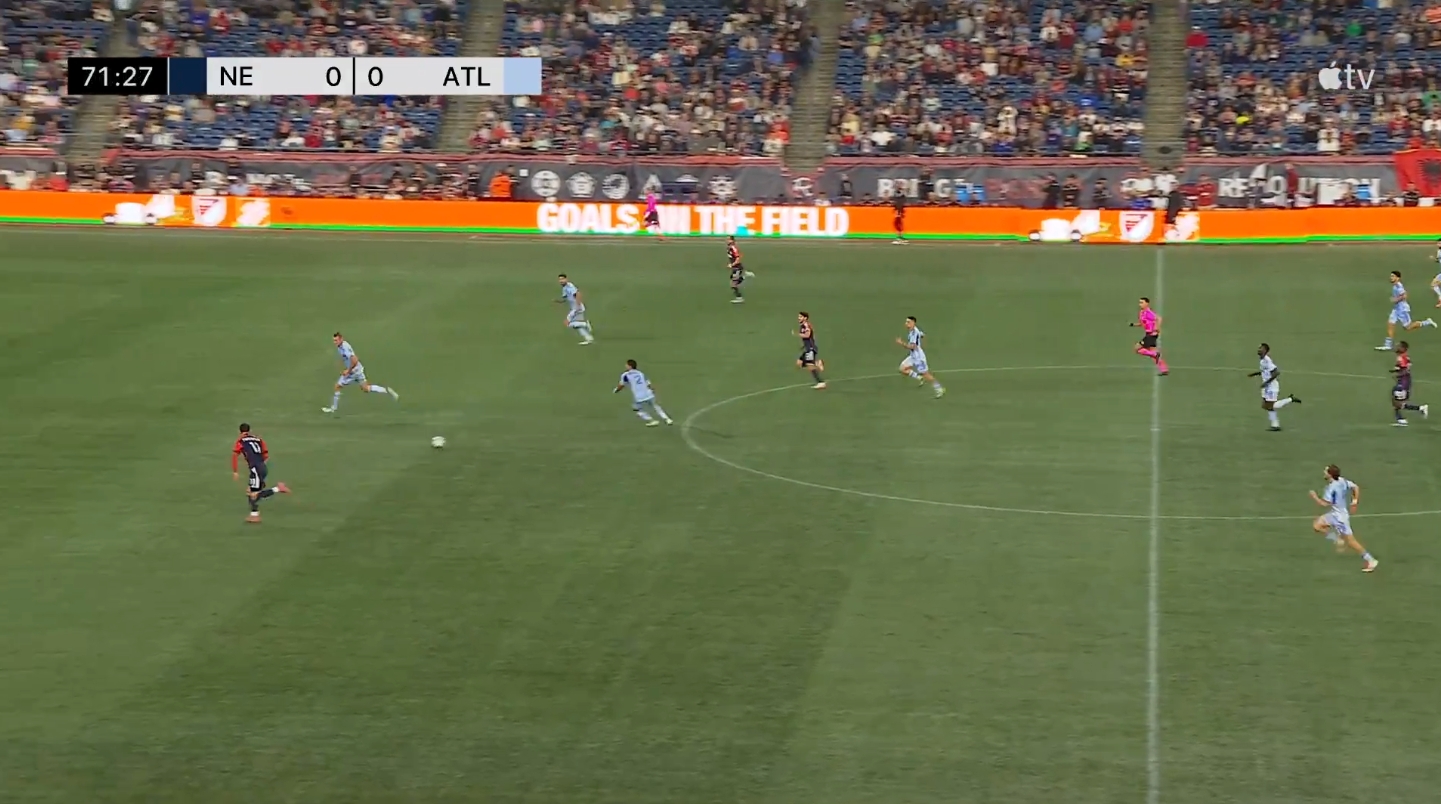
- 71’ (0–1): Gil → Turgeman, cutback and finish. Top quality finish, but he was in part aided by ATLUTD’s passive ‘contain and delay’ defending - a structure problem more than a single missed duel. Gil carried into space and released Turgeman, but has his choice at either wing. What stands out is the absence of marking. Both Gil and Turgeman advanced unopposed, with Berrocal stranded between zones and no Atlanta player close enough to challenge either.
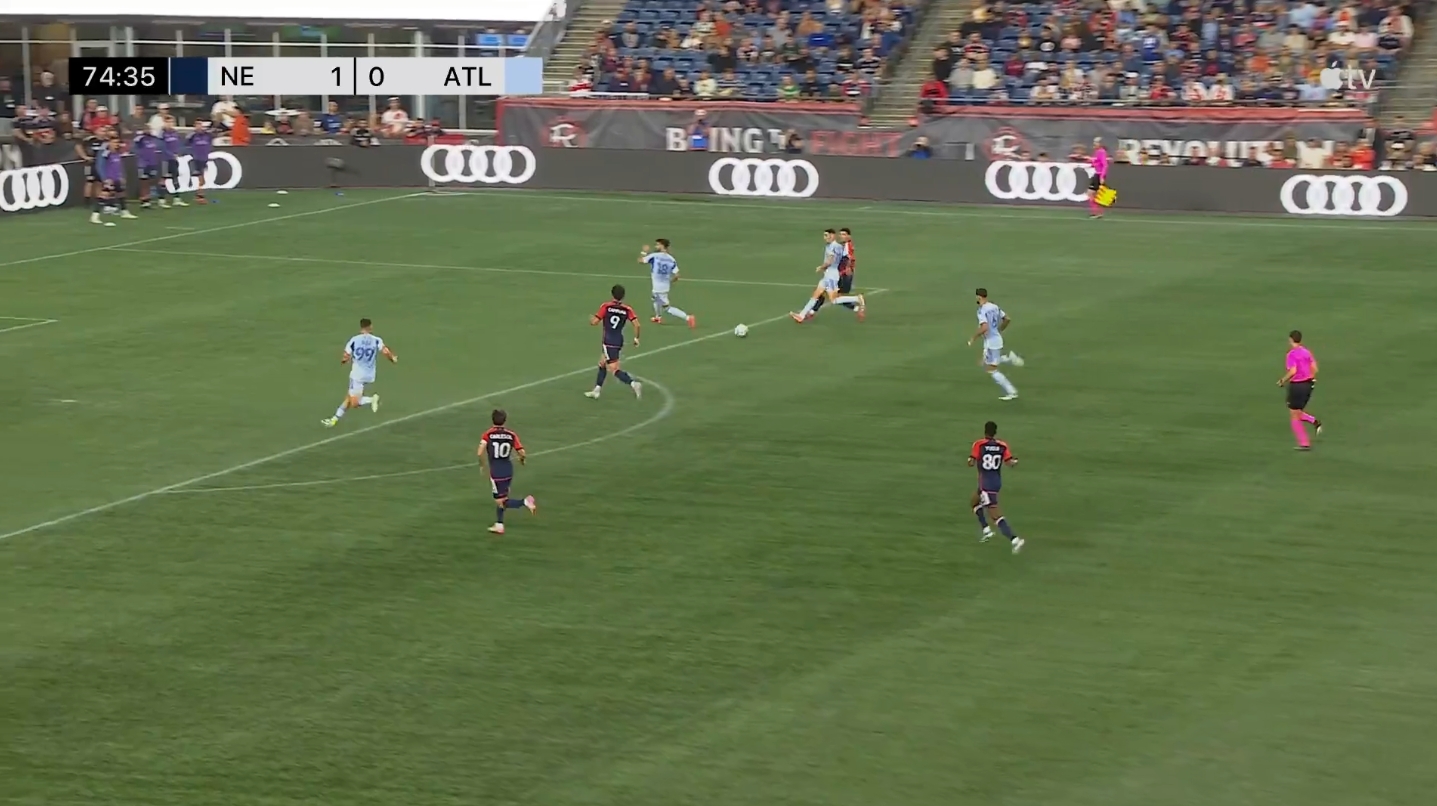
- 75’ (0–2): Turner’s long distribution triggered a direct sequence to Campana. Atlanta were stretched, late in transition, and slow to reset defensively. Amador stepped out to pressure, leaving Turgeman unmarked at the top of the box. With no fullback recovering and Berrocal trailing, the responsibility fell to Slisz - forced to defend two central runners. The result was inevitable: Campana unopposed, emphatic finish.
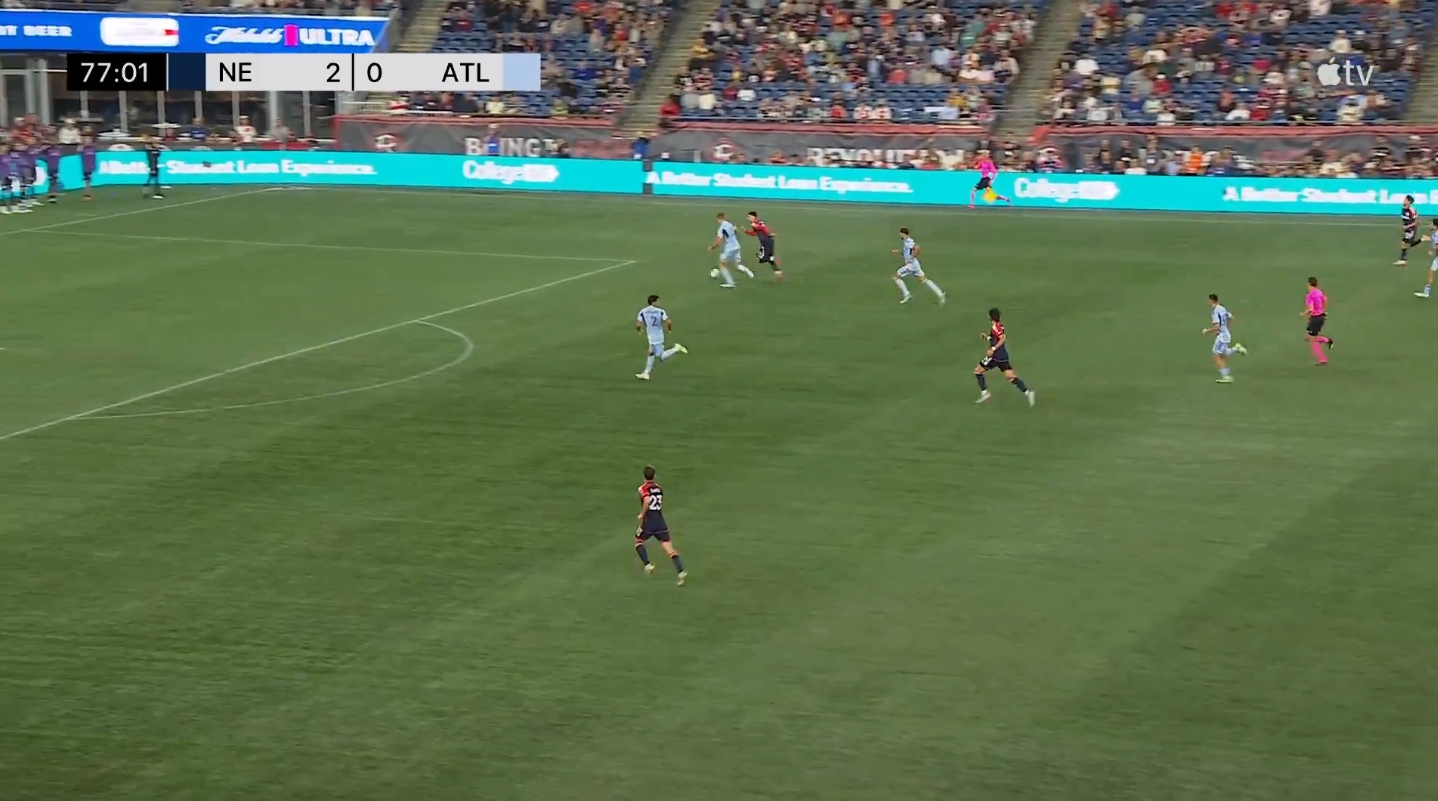
- 77’: The lesson is not learned as Hernández was left alone to cover two open runners. This sequence ended in a blocked shot from Sands.
From there, New England shut the game down. Atlanta’s next three subs (84′ Lennon for Hernández, Muyumba for Alzate, Afonso for Saba) arrived too late to alter the pattern. The final 10 minutes were disjointed, with spacing breakdowns and aimless possession. Atlanta finished the half with no shots on target and long sequences without meaningful progression.
Second-half stats (NE–ATL): xG 1.23–0.30, shots 12–5, shots on target 4–0, touches in box 19–7. That is the profile of a game that slipped out of Atlanta’s control and stayed that way.
Where it Failed ( Structural )
Press-to-possession transition: First-half pressing created favorable field position; conversion patterns were missing. Final-third occupation was ad hoc rather than choreographed (runners not staggered, underloaded weak side).
Second-ball control: Once New England raised tempo, Atlanta lost every second phase in the middle third. Compactness between the lines fractured; distances grew; New England walked into the half-spaces.
Change management: The 64′ swap of Thiaré for Latte Lath removed the top-line anchor Atlanta needed to relieve pressure. Later triple change at 84′ came after momentum and the scoreline had already turned. It was far too late to change the game state.
Right-side coverage: Turgeman’s entry targeted the channel outside Gregersen/Hernández. Rotations were slow; help arrived a step late on both goals.
Post-Game Recap
Good
- Gregersen — Multiple recovery runs and interventions even as the shape unraveled. Physically banged up, but competed.
- Slisz - Volume distributor (66/74 passes, ~89%) and led touches in the first hour, but influence dipped as Atlanta lost compactness.
- Almirón - 7 chances created per; carried creative load in a team that stopped providing him platforms after the break.
- Hibbert - Not at fault on either goal; although we keep saying that. He did have several strong saves when the dam broke.
Needs to Step Up
- Lobzhanidze — Lively dead ball early; invisible after halftime. Defensive diligence missing in a match that demanded it.
- Miranchuk — 6 shots led ATL, but too many were low-probability; several loose touches and overhits at key moments.
- Thiaré — Selfless pressing and tracking early, but less spark than recent weeks. Withdrawal at 64′ removed the reference point Atlanta needed.
- Latte Lath — Workrate moments, but press lag and low retention (passes 3/7) stalled sequences that required a hold-up outlet.
- Muyumba — Late cameo offered no defensive stabilizing and little on the ball. The midfield needed security and marking, not more vulnerability. Post-match, teammate Alzate said the group must “stay switched on the whole game” and focus on the little things. Muyumba’s late minutes instead highlighted those very gaps: untracked runners, missed duels, and loss of focus in transition.
- Defense - Hernández and Amador both had promising first-half moments, then were pinned as NE advanced their wingers and eights. Progressive actions dried up exactly when Atlanta needed field release.
Coaching / Game Management
- Plan A worked for 30–35 minutes: compress, swarm, play in their half.
- Plan B never arrived: when New England raised tempo and inserted Yusuf/Turgeman, Atlanta did not adjust spacing or shore up the right side.
- Subs: The triple change at 84′ trailed the game’s pivot by 30 minutes and essentially chased a scoreline rather than pre-empting it.
Post-match, Ronny Deila again described the team as “too soft”. A phrase which has been repeated across several defeats, and risks becoming stale. More damning, he admitted they had specifically scouted Turner’s long goal kicks and still conceded from exactly that pattern. Preparation without execution is as costly as no preparation at all.
The Bottom Line
Atlanta were the better side in the first half and had nothing to show for it. New England were the better side in the second half and took everything. The differential is not luck; it’s structure—how the team protects itself when the opponent changes rhythm and where the ball goes when it is finally won. As Alzate admitted, it’s the small margins - the tracking run, the second ball, the concentration - that separate competing from collapsing. Until Atlanta prove they can stay switched on for 90 minutes, these results will repeat.
📌 Three matches remain in 2025. Every minute is an evaluation. The standard is unforgiving. The wooden spoon is too close for comfort.
ATLUTD VIPs ATLUTD · GAMEDAY